
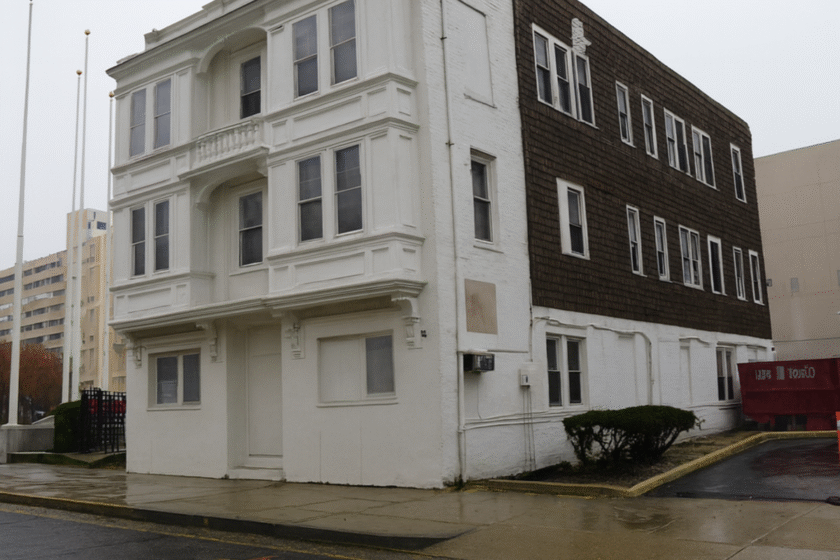

The once-famed Vera Coking house in Atlantic City was demolished for $583K, marking the end of a tumultuous chapter in the city’s storied past.
The property, situated close to the boardwalk, had long been a subject of controversy and legal battles.
Its destruction marks a significant moment in Atlantic City’s ongoing transformation and redevelopment efforts.
The house, which had stood defiant for decades, ultimately became another casualty of urban change.
This demolition is part of a broader initiative to revamp downtown Atlantic City, aligning with modern development trends and economic aspirations.
A Famous Boardwalk Battleground
The Coking property, located near Atlantic City’s bustling boardwalk, was once engulfed by the glitz and glamour of casino developments.
For decades, the modest boarding house stood its ground amidst towering casino rivals, becoming a symbol of resistance.
In the 1990s, the property’s strategic location intrigued developers, especially during Atlantic City’s casino boom.
The boardwalk area, central to entertainment and tourism, often saw ambitious projects aimed at tapping into the high influx of visitors.
Despite the bustling environment, Coking’s house was an unyielding fixture, surrounded by growth and expansion but never surrendering its spot.
Vera Coking’s Defiant Stand
Vera Coking purchased the house in the 1960s, originally intending it as a family residence, before facing powerful property developers.
She famously declined several lucrative offers, withstanding pressures to sell her property despite substantial financial incentives.
Coking’s determined refusal to part with her home made her a local legend, often drawing media attention for standing up to influential figures including Bob Guccione and Donald Trump.
Her unwavering stance became emblematic of individual resistance against corporate giants.
Her story gained national interest, serving as an inspirational tale of one woman’s fight to protect her home against immense odds, embodying a spirit of independence.

Trump Plaza’s Ambitious Expansion
Donald Trump, then a burgeoning real estate mogul, sought to expand his Atlantic City presence through the Trump Plaza complex.
Trump offered Coking substantial sums to acquire her property, an essential piece for his vision of a grand casino expansion.
This clash drew significant media coverage, highlighting Trump’s ambitious plans to revitalize sections of the boardwalk through expansive projects.
Nonetheless, the inability to close the deal with Coking left a notable gap in his development aspirations.
Coking’s house was a stark contrast to Trump’s adjacent opulence, often highlighted in news stories as an example of her resolve against overpowering development schemes.
Eminent Domain: A Landmark Case
The dispute over Coking’s property brought eminent domain to the forefront, sparking a landmark legal battle that scrutinized property rights.
Eminent domain allows governments to seize private property for public use, requiring fair compensation.
In 1998, a ruling sided with Coking, fending off attempts to forcibly acquire her land, marking a significant victory for property owners resisting eminent domain.
The ruling underscored the legal limits of eminent domain in favor of individual property rights.
The case set a precedent, reinforcing the importance of legal frameworks in property disputes and becoming a foundational reference point in future eminent cases involving individual vs. corporate and government interests.

Auction Outcome: $583K Sale
Vera Coking’s iconic Atlantic City house recently sold for $583,000 at auction.
The property, long a symbol of individual property rights, was purchased by Carl Icahn, the current owner of the Trump Plaza.
The auction, held on July 31, 2014, ended a decades-long saga involving Coking, who famously resisted selling her home to make way for casino development.
Bidders showed interest, but Icahn’s winning bid marked the end of an era for the historic site.
Despite its dilapidated state over recent years, the property’s prime location drew attention.
Situated adjacent to the former Trump Plaza, the area remains a key part of Atlantic City’s landscape.
The sale came after a series of failed attempts to sell the house privately, with previous asking prices reaching as high as $1 million.
Ultimately, the auction reflected the shifting economic conditions of the city’s real estate market.
Legacy of Property Rights
Vera Coking’s battle to keep her home became a landmark case in property rights discussions.
In the 1990s, Donald Trump sought to acquire the property to expand his casino empire but was thwarted by Coking’s refusal.
Coking’s resistance underscored fundamental issues of eminent domain, drawing national attention and support.
Her stand represented a broader fight against corporate pressures and was celebrated by property rights advocates.
The house had originally been a boardinghouse since the 1960s before Coking moved there, adding layers to its storied past.
Despite pressures from figures like Trump and earlier developers, Coking prevailed through legal battles.
Although the house’s demolition marks the end of its physical presence, Coking’s legacy continues to influence discussions on eminent domain.
Her story remains a case study in the balance between development interests and individual rights.
