
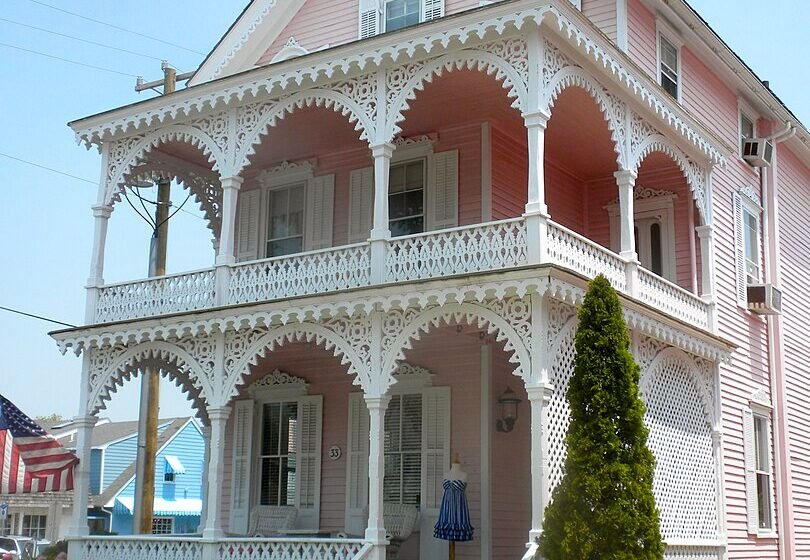
Century homes were built with a variety of roof styles, each reflecting the architectural trends and functional needs of their time. These roofs were designed not only for aesthetic appeal but also for durability, climate adaptation, and structural integrity.
Understanding the different roof styles found in century homes provides insight into their historical significance and practical advantages, helping homeowners make informed restoration and maintenance decisions.
Common Roof Styles in Century Homes
Gable Roof

One of the most widely used roof styles in century homes, the gable roof features two sloping sides that meet at a central ridge, forming a triangular shape. This design is particularly common in Colonial, Federal, and Greek Revival homes.
The primary benefit of a gable roof is its ability to shed water and snow efficiently, making it ideal for areas with heavy precipitation. The steep slope also allows for better attic ventilation and the possibility of additional living or storage space in the upper levels of the home. However, in regions with high winds, gable roofs may require extra bracing to prevent damage.
Hip Roof

Hip roofs, commonly seen in Victorian, Second Empire, and Prairie-style homes, have four sloping sides that meet at a central ridge. Unlike gable roofs, they do not have vertical end walls, giving them a more compact and stable structure.
The key advantage of a hip roof is its wind resistance, making it well-suited for areas prone to storms or strong gusts. The sloped design also helps with water drainage and provides additional insulation, keeping homes cooler in warmer climates. However, hip roofs are often more complex to build and maintain due to their multiple intersecting planes.
Mansard Roof

Associated with Second Empire and French-influenced architecture, the mansard roof features two slopes on each side, with the lower slope being steeper and often containing dormer windows. This design maximizes usable attic space while maintaining an elegant, European-inspired appearance.
The biggest advantage of a mansard roof is its ability to create additional living space without altering the footprint of the home. It also allows for easier future expansions, as the upper level can be converted into fully functional rooms. However, the flat upper section can be more vulnerable to water pooling and requires proper maintenance to prevent leaks.
Gambrel Roof

Most commonly found in Dutch Colonial and barn-style homes, the gambrel roof is similar to a mansard roof but features only two sides instead of four. The double-sloped design provides a steep lower slope and a shallower upper slope, maximizing attic space.
The main benefit of a gambrel roof is its ability to provide a spacious upper level, making it ideal for homes that require additional storage or lofted rooms. Its simple construction also makes it more cost-effective compared to other complex roof styles. However, gambrel roofs require regular maintenance, particularly at the transition points between slopes, to prevent leaks and structural weakening.
Flat Roof

Flat roofs, though less common in residential settings, were a defining feature of early 20th-century Art Deco, Prairie, and some mid-century modern homes. These roofs have a low pitch and are often used in conjunction with parapet walls.
The primary advantage of a flat roof is its ability to support rooftop gardens, terraces, or solar panels, making it a functional and space-efficient choice. It also contributes to a sleek, modern aesthetic. However, flat roofs require more frequent maintenance, as they are prone to water pooling and require proper drainage systems to prevent leaks.
Cross-Gabled and Cross-Hipped Roofs

Many century homes, especially those with more intricate layouts, feature cross-gabled or cross-hipped roofs. These styles combine multiple gable or hip sections to accommodate extensions, wings, or asymmetrical designs, commonly found in Queen Anne and Tudor Revival homes.
The benefit of these roofs is their ability to create visually dynamic exteriors while allowing for varied interior spaces. They offer excellent ventilation and weather resistance when properly designed, but their complexity makes maintenance more challenging, especially at intersecting ridges and valleys.
Final Thoughts
The roof styles found in century homes were designed to complement architectural aesthetics while providing structural durability and climate adaptability. Whether it’s the practicality of a gable or hip roof, the elegance of a mansard or gambrel, or the functionality of a flat design, each style has its own advantages and challenges. Understanding these differences can help homeowners make informed decisions when restoring or maintaining their century home’s roof, ensuring both historical accuracy and long-term performance.