
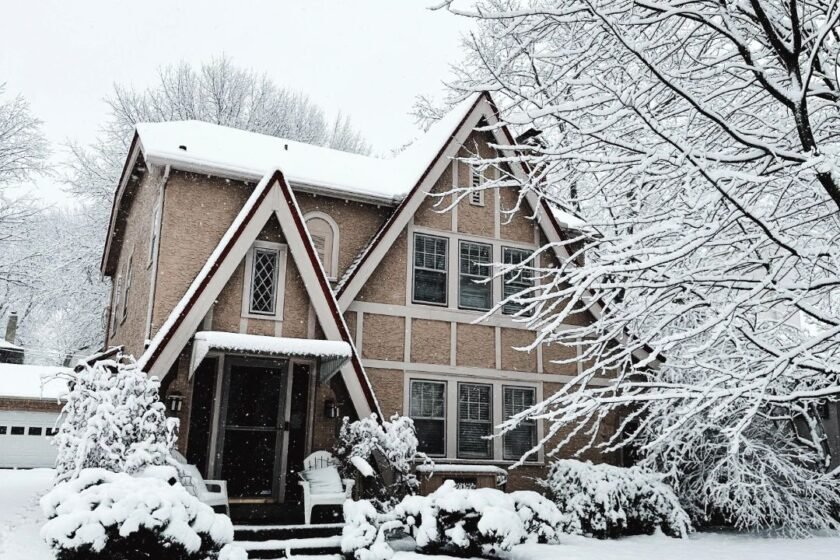

Century homes built in regions with heavy snowfall were designed with specific roofing styles to withstand harsh winter conditions. Snow accumulation, ice dams, and freezing temperatures posed significant challenges, and builders of the past developed roofing solutions that promoted snow shedding, prevented structural damage, and provided long-term durability. The result was a range of roof designs that not only served practical needs but also became defining features of architectural styles in colder climates.
Roof Designs That Work Best in Snowy Climates

Steeply Pitched Gable Roofs for Snow Shedding
One of the most common roof types found in snow-prone century homes is the steeply pitched gable roof. The sharp incline of this design allows snow to slide off easily, preventing excessive accumulation that could lead to roof collapse.
Gable roofs were particularly popular in Colonial, Gothic Revival, and Folk Victorian homes, where their dramatic angles also added to the home’s aesthetic appeal. The simplicity of the gable roof made it easy to construct and repair, which was an important consideration for homeowners in rural areas dealing with harsh winters.
Mansard Roofs for Extra Living Space and Snow Control
While the Mansard roof is often associated with French-influenced architecture, its practicality in snowy regions made it a common choice in certain areas of the Northeast and Midwest. The steep lower slope helps shed snow efficiently, while the flatter upper portion allows for additional living space in the attic or upper floors.
Homes from the Second Empire period (mid-to-late 1800s) frequently featured Mansard roofs, offering both functionality and elegance. However, this roof style required reinforced framing to handle occasional heavy snow loads on the flatter top section.
Gambrel Roofs for Strength and Storage
A variation of the Mansard design, the Gambrel roof—commonly seen in Dutch Colonial and barn-style homes—features a steep lower slope and a shallower upper slope. This design allows for maximum interior space, making it ideal for homes where attic storage or lofted living areas were necessary.
In snowy climates, Gambrel roofs were constructed with reinforced rafters and cross beams to prevent sagging under heavy snow. While not as efficient at shedding snow as a steep gable roof, the Gambrel design remained popular due to its durability and space-saving benefits.
A-Frame Roofs for Extreme Snowfall
The A-frame roof, with its extreme pitch forming a near-perfect triangle, is one of the best designs for handling heavy snow loads. This style became widely used in mountain regions and areas with long, harsh winters, as its shape allows snow to slide off quickly without the risk of accumulation.
A-frame homes became particularly popular in ski towns and remote northern settlements, where simple, efficient construction was essential. The steep pitch also allowed homeowners to take advantage of lofted living spaces, making the most of a compact footprint.
Hipped Roofs for Even Weight Distribution
The hipped roof—which slopes down on all four sides—became a common choice for snow-prone century homes because of its ability to distribute weight evenly. Unlike gable roofs, which have two large sloping sides, a hipped roof has four gently sloping surfaces, reducing the risk of wind damage and uneven snow loads.
This design was commonly found in Georgian, Prairie, and some Craftsman homes, where it provided not only structural benefits but also a distinctive, balanced appearance. While hipped roofs do not shed snow as quickly as steep gable roofs, their durability and resistance to high winds made them a practical choice in areas prone to blizzards.
Roofing Materials for Snow Durability

Slate Roofs for Longevity
Many century homes in snow-prone regions were built with slate roofs, which are highly resistant to snow, ice, and extreme cold. Slate tiles have a smooth surface that prevents ice buildup, making them an excellent choice for homes in the Northeast and Appalachian regions. Though costly, slate roofs were prized for their longevity, often lasting over 100 years with proper maintenance.
Metal Roofs for Snow Shedding
Metal roofs became widely used in cold climates due to their slick surface and durability. These roofs allow snow to slide off quickly, reducing the risk of structural strain. Many farmhouses, barns, and even some residential homes from the early 20th century featured standing seam metal roofs, which were both weather-resistant and fireproof.
Wooden Shingles and Cedar Shake Roofs
Wooden shingles, particularly cedar shakes, were a common roofing material in early century homes. Cedar naturally resists moisture and decay, making it an excellent choice for cold, snowy regions. However, wood shingles require regular maintenance to prevent warping and cracking caused by freeze-thaw cycles.
Asphalt and Composite Shingles for Affordability
By the early 1900s, asphalt shingles became a more affordable alternative to slate and wood. While not as long-lasting, asphalt shingles were lightweight, easy to replace, and more accessible to homeowners in growing suburban areas. Many snow-prone homes from the early 20th century still feature original asphalt or composite shingle roofs.
Final Thoughts
Century homes in snowy regions were built with roof designs that prioritized snow shedding, structural durability, and long-term resilience. Whether steeply pitched gable roofs, elegant Mansard styles, or sturdy hipped roofs, these homes were crafted to withstand winter’s challenges. Even today, many of these roofing techniques and materials remain essential for homeowners in cold climates, proving that historic architecture was as practical as it was beautiful.