

Modern life is surrounded by tools designed to make everything faster and easier. From smartphones that handle communication instantly to apps that automate shopping, banking, navigation, and work, daily tasks now require less physical effort than ever before. Many of these technologies were built between the late 1990s and the 2010s, driven by the promise of efficiency and time savings. Yet despite this convenience, people consistently report feeling mentally drained, emotionally stretched, and chronically tired. The contradiction is striking. Instead of freeing up energy, technology often creates new pressures, expectations, and invisible workloads. Understanding this exhaustion requires looking beyond gadgets themselves and examining how modern systems reshape attention, time, and mental labor. The fatigue people experience today is not accidental; it is a predictable outcome of constant connectivity, rising cognitive demands, and blurred boundaries between rest and responsibility.
Constant Connectivity Eliminates True Mental Rest

One of the earliest promises of digital technology was flexibility. Email, messaging apps, and cloud-based tools were built to allow communication at any time, from anywhere. While this increased convenience, it quietly removed natural stopping points from daily life. In earlier decades, work often ended when people left an office or classroom. Today, notifications follow people into evenings, weekends, and even sleep. The brain remains on alert, anticipating messages or updates. This low-level vigilance consumes mental energy even when no action is required. Studies on cognitive load show that simply expecting interruptions reduces focus and increases fatigue. The exhaustion does not come from doing more tasks, but from never fully disengaging. Without uninterrupted mental rest, recovery becomes incomplete, leading to a persistent feeling of tiredness that convenience alone cannot solve.
Technology Increased Speed but Also Raised Expectations
Many productivity tools were introduced in the early 2000s to help people complete tasks faster. Document automation, instant messaging, and real-time collaboration reduced delays that once slowed workflows. However, speed quickly became the new baseline. What once felt efficient is now expected. Faster responses, quicker turnaround times, and constant availability are treated as normal rather than exceptional. This escalation creates pressure to perform at a pace the human nervous system was never designed to sustain. The brain processes information faster, but emotional regulation and decision-making still require time. When expectations rise faster than biological limits, exhaustion follows. People are not tired because technology failed, but because success redefined what “enough” looks like. Efficiency no longer creates breathing room; it simply tightens the schedule.
Mental Multitasking Drains Energy Faster Than Physical Work
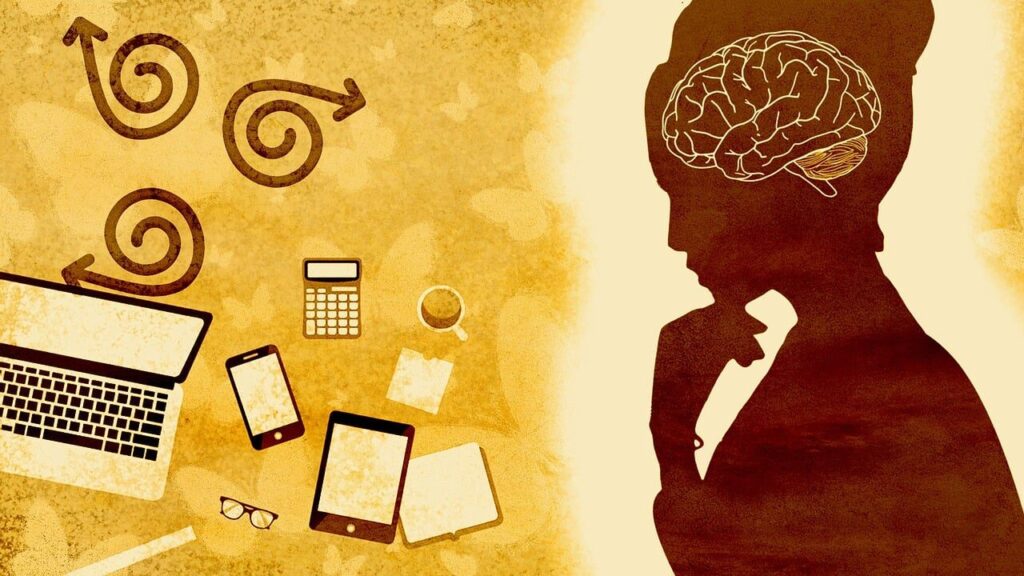
Technological convenience encourages constant multitasking. Switching between emails, messages, tabs, apps, and notifications feels efficient, but it places heavy strain on the brain. Research into attention shows that the mind does not truly multitask; instead, it rapidly switches focus. Each switch carries a cognitive cost, requiring energy to disengage from one task and reorient to another. Over the course of a day, these tiny costs accumulate into significant mental fatigue. In the past, many tasks were sequential and physically grounded, allowing the brain to settle into rhythm. Today’s fragmented workflows keep attention scattered, preventing deep focus or natural recovery. Even leisure activities often involve screens and notifications, extending the same mental pattern. This explains why people feel exhausted without feeling productive. The brain is busy all day, yet rarely engaged deeply enough to feel satisfied or restored.
Convenience Shifted Work Into Invisible Mental Labor
Many technologies are marketed as time-saving, but they often transfer responsibility rather than remove it. Online booking, self-checkouts, digital forms, and automated systems reduce staffing needs but increase user involvement. People now track passwords, manage subscriptions, troubleshoot errors, compare endless options, and monitor systems that once ran in the background. This creates invisible mental labor that goes largely unrecognized. Because it is not physically demanding, it feels deceptively light, yet it steadily consumes cognitive resources. Decision fatigue grows when every small task requires choices and attention. Over time, this constant low-level effort builds exhaustion. Convenience did not eliminate work; it redistributed it into smaller, quieter tasks that fill every gap in the day. The result is a sense of being constantly occupied without a clear endpoint for rest.
The Blurring of Work and Personal Life Prevents Recovery

Technology removed many physical boundaries that once separated work from personal time. Laptops, smartphones, and remote access tools were built to increase flexibility, especially as remote work expanded in the late 2000s and accelerated after 2020. While these tools offer freedom, they also dissolve clear off-hours. Many people now check work messages during meals, answer emails at night, or mentally prepare for tasks before waking. This prevents the nervous system from entering full recovery mode. True rest requires psychological detachment, not just inactivity. When work remains mentally present, even relaxation becomes shallow. Over time, this incomplete recovery leads to chronic exhaustion rather than temporary tiredness. People may sleep enough hours, yet still feel drained, because the mind never fully powers down. Convenience extended productivity, but quietly shortened genuine rest.
Information Overload Overwhelms Natural Processing Limits
Modern technology delivers an unprecedented volume of information. News updates, social media posts, emails, videos, and alerts compete for attention from morning to night. The human brain evolved to process limited, meaningful input, not constant streams of fragmented data. When exposed to excessive information, cognitive filtering becomes exhausting. People spend mental energy deciding what to ignore rather than what to focus on. This leads to decision fatigue, anxiety, and a persistent sense of mental clutter. Unlike physical fatigue, information overload does not signal clearly when limits are reached. Instead, exhaustion builds quietly until concentration drops and motivation fades. Even entertainment often demands attention and evaluation, offering little true relief. The problem is not access to information itself, but the lack of natural pauses that once allowed the brain to reset and integrate what it consumed.
Productivity Culture Turns Rest Into a Source of Guilt
As technology made work faster, cultural attitudes toward productivity shifted. Tools built to save time were quickly absorbed into a mindset that values constant output. Rest began to feel undeserved unless everything was completed. Many apps now track steps, sleep, screen time, and productivity, subtly turning rest into another performance metric. Instead of restoring energy, breaks are judged for usefulness. This mindset creates psychological exhaustion because the mind never feels finished. Even leisure is optimized, compared, or documented. Historically, rest had social permission and clear boundaries. Today, doing nothing can feel wasteful. This internal pressure drains motivation and increases burnout, especially when combined with endless digital comparison. People are not only tired from work, but from evaluating themselves constantly. Convenience removed friction, but productivity culture filled the space with expectation rather than relief.
Emotional Fatigue From Continuous Digital Social Exposure
Technology dramatically expanded social access, allowing constant connection through messaging and social platforms. While this reduced isolation, it also increased emotional demands. People are now exposed to others’ opinions, struggles, achievements, and conflicts throughout the day. This steady emotional input requires empathy, interpretation, and restraint. The brain processes social information as meaningful and demanding, even when interactions are brief or passive. In earlier eras, social contact had natural limits. Today, emotional exposure continues without pause. This can create compassion fatigue, comparison stress, and emotional numbness. Even positive interactions require energy to respond appropriately. Over time, the emotional labor of staying socially present online contributes to exhaustion. People may feel drained without understanding why, mistaking emotional overload for personal weakness rather than a structural consequence of constant digital connection.
Technology Compresses Time Instead of Freeing It
Many modern tools were designed to save minutes, yet those saved minutes rarely become rest. Instead, they are quickly filled with additional tasks. Faster communication, automated scheduling, and instant access compress time, making days feel denser rather than lighter. What once took hours now takes minutes, but expectations expanded to match the gained speed. People juggle more responsibilities within the same day, leaving no natural gaps. This compression removes moments of transition that once allowed mental recovery, such as commuting pauses or waiting periods. Without these buffers, the mind moves continuously from one demand to the next. The result is a sensation of racing without progress. Exhaustion builds not from long hours alone, but from relentless pace. Convenience reshaped time into a tightly packed structure that leaves little room for breathing, reflection, or restoration.
The Body Adapts Slower Than Technological Change

Human biology evolves slowly, while technology advances rapidly. Many of today’s systems were built within the last few decades, far faster than the body’s ability to adapt. The nervous system still relies on rhythms of effort and recovery, presence and absence. Constant stimulation, artificial lighting, screen exposure, and irregular schedules disrupt these natural patterns. Sleep quality declines, stress hormones remain elevated, and physical signals of fatigue are often ignored. This mismatch creates chronic exhaustion that feels personal but is largely systemic. People blame themselves for lacking energy, unaware that they are operating in environments misaligned with biological needs. Technology did not account for rest cycles; it optimized for availability and output. Until systems are redesigned with human limits in mind, exhaustion will remain a common experience despite ever-increasing convenience.
Keep reading on The WiC Project Lifestyle Blog & Miriam’s Boutique: Home Goods, Beauty, & Fashion Store