
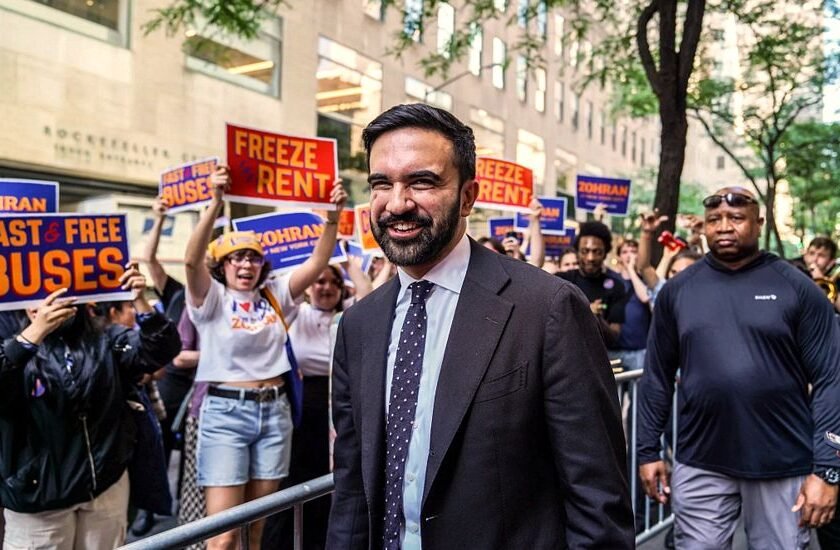

Zohran Mamdani, a New York mayoral candidate, is trending for his pledge to implement aggressive rent control. His promise resonates with frustrated tenants but overlooks the broader challenges of New York City’s housing shortage.
Rent control may offer temporary relief, but it fails to address long-term issues. Critics argue that such policies are a short-term patch rather than a sustainable solution. For anyone thinking beyond a few months, the approach risks worsening the housing crisis rather than fixing it. The city’s complex housing market requires more structural reforms than rent caps.
Read: Trump’s DOJ Threats to Cut Victim Aid for Refusing ICE Cooperation Sued by 20 States
Historical Failures of Rent Control in the U.S.
New York City has a long history of rent control, often cited as a cautionary example. In 1994, San Francisco’s rent control expansion caused evictions to spike 83% and wrongful eviction claims to rise 125%.
Landlords evicted tenants to charge market rents, reducing the overall supply of rental housing by 15%. Some properties were converted to condos or removed from the rental market entirely. Studies show that rent control can unintentionally increase city-wide rents while creating negative side effects for surrounding neighborhoods. These lessons demonstrate the limits of rent control in dense urban areas.
Also read: Trump Warns Putin of ‘Rough Situation’ While Urging Zelenskyy to Show Flexibility
International Lessons: Ireland and Buenos Aires
Ireland’s nationwide Rent Pressure Zone (RPZ) caps rent increases at 2% per year, yet since 2024, new property rents rose 8.1% and existing units 5.9%. Landlords charge higher upfront prices, stalling construction and creating a shortage of 20,000 units annually. In Buenos Aires, Argentina’s 2020 Lipovetzky Law limited rent increases to once per year, causing a surge in empty units and skyrocketing prices amid inflation.
When the law was repealed in 2023, available rentals rose 170% and prices dropped 40%. These international examples illustrate how strict rent controls reduce supply and exacerbate affordability issues rather than solving them.
Also read: Trump Finalizes Decision on Sending U.S. Troops to Ukraine
Positive U.S. Models
Some U.S. policies have mitigated the harms of rent control. California’s Costa-Hawkins Act allows vacancy decontrol, letting landlords charge market rates when a tenant leaves. This reduces eviction pressures and avoids large-scale shortages. Austin, Texas, has focused on increasing housing supply through permitting reform, upzoning, and mixed-use development.
New construction has reduced competition for rentals, dropping prices by 9%. These approaches show that boosting housing availability, rather than freezing rents, effectively improves affordability without discouraging landlords or investors.
Also read: Speaker Mike Johnson Claims Democrats Planning Trump’s Third Impeachment
Economic Incentives and Investor Behavior
Rent control discourages investment in housing projects because returns are capped while risks remain high. Inflation further reduces profitability, making other asset classes more attractive. Treasury yields are low, but housing investments require significant capital and long-term risk tolerance. Policies like Mamdani’s proposed freeze on rents for over two million tenants could act as a price ceiling, prompting landlords to sell or withhold units. This behavior worsens the rental shortage and diminishes quality, leaving tenants with fewer options and crowded living conditions.
Also read: Vermont Governor Scott Rejects Trump’s Request to Send National Guard to D.C.
The Case for Supply-Focused Solutions
Instead of freezing rents, New York City should focus on reforms that increase housing supply. Streamlining permitting, easing zoning restrictions, and offering tax incentives for office-to-housing conversions can stimulate development.
Upzoning and increasing density near transit hubs would also improve availability. Historical evidence shows that creating more housing units stabilizes rents without disincentivizing landlords. Mamdani’s proposed approach risks empty units and a more severe housing crisis, while supply-focused policies offer long-term, sustainable relief for tenants and the city alike.